Freight in India move at very slow pace,lack of proper roads is given the primary reason but it seems to be secondary if carefully construed, some other factor that prop up are:
1. time synchronization are not designed to factor in entry restriction in cities like Mumbai and Delhi(most of the good is send/delivered ),which leads to time loss.
2. Most drivers are under paid so they try to make money through other routes like by reducing speed of vehicles to save fuel or by skipping tolls ,this pull down efficiency of the sector.
3. there is no mechanism to check the nature of goods being transferred without harassing the drivers by policeman.
4. owner dealers don't employ extra driver just to avoid cost incurred by him this increase travel time like it depends on the number of hour a driver takes rest.
5.A disquieting aspect is institutionalization of corruption on the route and transporters prefer it because it allow them to flout rules with impunity.like taking extra fuel tank to avoid differential pricing in various states.
6. For Railways see the average speed of train over the decade which is almost constant. We have seen passenger trains giving way to freight trains or vice versa delaying both the trains,this is due to lack of double tracks which would be used exclusively by passenger or goods trains.

7.We are too slow in exploiting our water ways for transportation all major developed countries have highly developed water ways and much of their transportation is through water. see below:-


1. time synchronization are not designed to factor in entry restriction in cities like Mumbai and Delhi(most of the good is send/delivered ),which leads to time loss.
2. Most drivers are under paid so they try to make money through other routes like by reducing speed of vehicles to save fuel or by skipping tolls ,this pull down efficiency of the sector.
3. there is no mechanism to check the nature of goods being transferred without harassing the drivers by policeman.
4. owner dealers don't employ extra driver just to avoid cost incurred by him this increase travel time like it depends on the number of hour a driver takes rest.
5.A disquieting aspect is institutionalization of corruption on the route and transporters prefer it because it allow them to flout rules with impunity.like taking extra fuel tank to avoid differential pricing in various states.
6. For Railways see the average speed of train over the decade which is almost constant. We have seen passenger trains giving way to freight trains or vice versa delaying both the trains,this is due to lack of double tracks which would be used exclusively by passenger or goods trains.
7.We are too slow in exploiting our water ways for transportation all major developed countries have highly developed water ways and much of their transportation is through water. see below:-
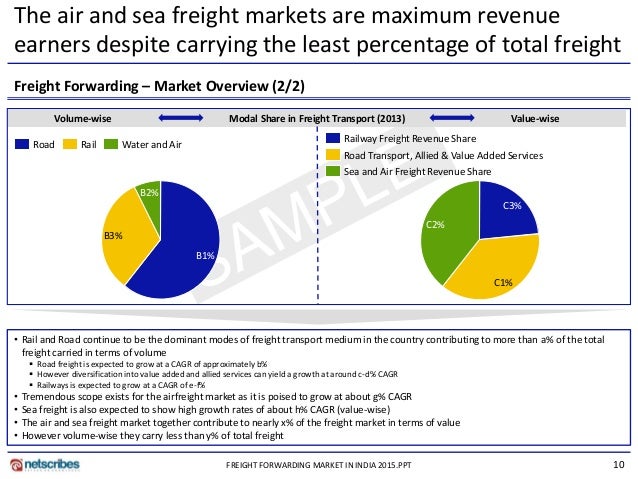
This is India's trade through different modes Air,land and water.You see the difference ?
So waterways are the solution
Hope is that these 111 waterways get on the track as early as possible: https://en.wikipedia.org/wiki/List_of_National_Waterways_in_India
